Hundred Years’ War
The Last DuelThe Hundred Years’ War began, in the book’s account, when English forces crossed the Channel and invaded France in 1339. Its successive campaigns did more than contest territory: they depleted the French crown, unsettled loyalties among the nobility, and made war a defining condition of life in Normandy. The conflict forms the political and material background to the fortunes of the Carrouges family, whose members served the French king even as other Norman nobles looked to England.
Invasion, Defeat, and the Ransom of a King
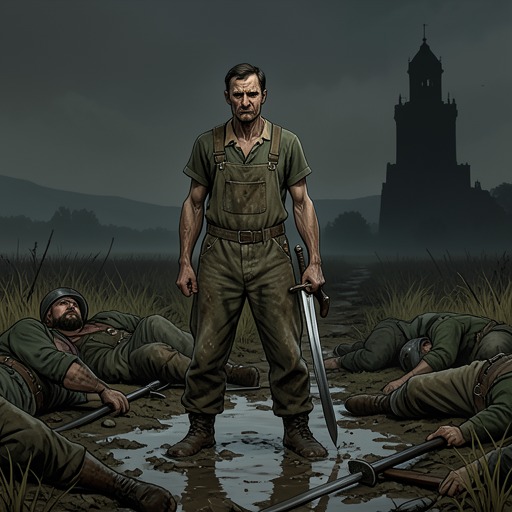
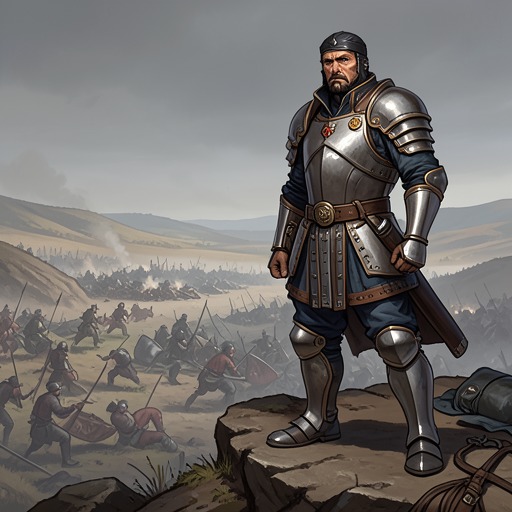
English victories exposed the scale of the danger. At the Battle of Crécy in 1346, the English cut down many of France’s leading knights, then captured Calais. In 1356, another slaughter of French knights at the Battle of Poitiers ended with King Jean captured and taken to London. His release came at a staggering price: France surrendered vast territories and noble hostages and promised a ransom of three million gold écus.
The war reached beyond armies and royal negotiations. English soldiers pillaged parts of France, while the capture of the king and the cost of securing his release left the kingdom politically and financially shaken. The book presents these defeats as turning points that made military service, ransom, and the security of land inseparable from the fate of the French realm.
A Kingdom Under Pressure
After King Jean’s capture, France fell into civil conflict. Some rebellious nobles allied themselves with the English; peasants, angered by new taxes, rose against their lords; and rival factions in Paris fought and killed one another in the streets. Chronic drought and crop failures added to the strain. The Black Death, which killed a third of Europe in 1348–49, returned at intervals, leaving further death and disruption in its wake.
The crisis also took on a religious dimension. The Western Schism, beginning in 1378, divided Christendom between rival popes in Rome and Avignon. The Roman pope blessed England’s war in France, while English clerics preached a new crusade and sold indulgences to finance it. In the book’s account, military conflict, political fracture, hardship, and religious division compounded one another rather than unfolding as separate crises.
Normandy’s Divided Loyalties
Normandy’s position made allegiance especially consequential. After losing most of the duchy to the French crown in the early thirteenth century, the English kings continued to covet it, and some Norman families remained alert to political changes that might favor England. When English forces began reconquering Normandy during the war, many Norman nobles defected and allied themselves with the invaders.
The Carrouges family took the opposing course. In 1380, its members swore fealty to the young Charles VI. Jean III de Carrouges had fought in campaigns against the English and served as a military captain at Bellême Castle; in 1364 he had also helped raise money for King Jean’s ransom. His son Jean IV carried that inheritance into a later generation of war. By 1380 he commanded a troop of four to nine squires in campaigns to drive the English from Normandy.
War also offered a route to advancement and income. Jean IV sought to enhance his reputation and enrich himself through booty and the capture of prisoners for ransom; a knighthood could have doubled his campaign pay. His family estate probably brought in 400 or 500 livres a year, while a squire’s daily campaign wage was half the one livre paid to a knight. Military service thus connected a family’s ambitions and finances to the wider struggle.
The Scottish Expedition and the War’s Continuing Reach
In May 1385, Jean IV joined the French expedition to Scotland (1385), commissioned by the French king. Its plan was to sail to Edinburgh, join the Scots, and move south through English territory, plundering towns and castles and destroying farms and villages as crops approached harvest. The expedition was led by Jean de Vienne, an experienced commander who had previously served with Jean de Carrouges during the Cotentin campaign. Its force comprised more than a thousand knights and squires, twice that number of crossbowmen and armed servants, and approximately three thousand fighters in all. Jean joined with nine other squires under his command.
The campaign also shows how the war extended beyond a single front: France sought to strike English lands through cooperation with Scotland. Yet military service did not guarantee advancement or reward. Jean left Normandy seeking wealth and distinction after setbacks at Count Pierre’s court; his return to Normandy came after months away, without resolving the conflicts that would shape the next phase of his life.
Terrain, Movement, and the Book’s Historical Frame
The war’s effects persisted between formal campaigns. Mercenary bands known as routiers prowled the countryside, making even familiar roads unsafe. Winter weather compounded the danger: rain, snow, ice, and mud slowed travel, while the harsh winter of 1385–86 made journeys across Normandy especially difficult. These conditions mattered to the book’s account of movement and timing, turning distance into a practical constraint rather than a simple measure on a map.
The narrative draws on chronicles, legal records, and other surviving documents, while acknowledging that sources sometimes disagree and that some gaps in the historical record are filled by the author’s reconstruction. Within that account, the Hundred Years’ War is both a sustained contest between kingdoms and a pressure shaping local choices: who remained loyal, who sought opportunity through arms, and how far violence and insecurity reached beyond the battlefield.